from Web Hosting Talk - Web Hosting Lounge http://bit.ly/30NXC3Y
via https://ifttt.com/ IFTTT
The Valley’s rocky history with clean tech investing has been well-documented.
Startups focused on non-emitting generation resources were once lauded as the next big cash cow, but the sector’s hype quickly got away from reality.
Complex underlying science, severe capital intensity, slow-moving customers, and high-cost business models outside the comfort zones of typical venture capital, ultimately caused a swath of venture-backed companies and investors in the clean tech boom to fall flat.
Yet, decarbonization and sustainability are issues that only seem to grow more dire and more galvanizing for founders and investors by the day, and more company builders are searching for new ways to promote environmental resilience.
While funding for clean tech startups can be hard to find nowadays, over time we’ve seen clean tech startups shift down the stack away from hardware-focused generation plays towards vertical-focused downstream software.
A far cry from past waves of venture-backed energy startups, the downstream clean tech companies offered more familiar technology with more familiar business models, geared towards more recognizable verticals and end users. Now, investors from less traditional clean tech backgrounds are coming out of the woodworks to take a swing at the energy space.
An emerging group of non-traditional investors getting involved in the clean energy space are those traditionally focused on fintech, such as New York and Europe based venture firm Anthemis — a financial services-focused team that recently sat down with our fintech contributor Gregg Schoenberg and I (check out the full meat of the conversation on Extra Crunch).
The tie between clean tech startups and fintech investors may seem tenuous at first thought. However, financial services has long played a significant role in the energy sector and is now becoming a more common end customer for energy startups focused on operations, management and analytics platforms, thus creating real opportunity for fintech investors to offer differentiated value.
Though the conversation around energy resources and decarbonization often focuses on politics, a significant portion of decisions made in the energy generation business is driven by pure economics — Is it cheaper to run X resource relative to resources Y and Z at a given point in time? Based on bid prices for Request for Proposals (RFPs) in a specific market and the cost-competitiveness of certain resources, will a developer be able to hit their targeted rate of return if they build, buy or operate a certain type of generation asset?
Alternative generation sources like wind, solid oxide fuel cells, or large-scale or even rooftop solar have reached more competitive cost levels – in many parts of the US, wind and solar are in fact often the cheapest form of generation for power providers to run.
Thus as renewable resources have grown more cost competitive, more, infrastructure developers, and other new entrants have been emptying their wallets to buy up or build renewable assets like large scale solar or wind farms, with the American Council on Renewable Energy even forecasting cumulative private investment in renewable energy possibly reaching up to $1 trillion in the US by 2030.
A major and swelling set of renewable energy sources are now led by financial types looking for tools and platforms to better understand the operating and financial performance of their assets, in order to better maximize their return profile in an increasingly competitive marketplace.
Therefore, fintech-focused venture firms with financial service pedigrees, like Anthemis, now find themselves in pole position when it comes to understanding clean tech startup customers, how they make purchase decisions, and what they’re looking for in a product.
In certain cases, fintech firms can even offer significant insight into shaping the efficacy of a product offering. For example, Anthemis portfolio company kWh Analytics provides a risk management and analytics platform for solar investors and operators that helps break down production, financial analysis, and portfolio performance.
For platforms like kWh analytics, fintech-focused firms can better understand the value proposition offered and help platforms understand how their technology can mechanically influence rates of return or otherwise.
The financial service customers for clean energy-related platforms extends past just private equity firms. Platforms have been and are being built around energy trading, renewable energy financing (think financing for rooftop solar) or the surrounding insurance market for assets.
When speaking with several of Anthemis’ clean tech portfolio companies, founders emphasized the value of having a fintech investor on board that not only knows the customer in these cases, but that also has a deep understanding of the broader financial ecosystem that surrounds energy assets.
Founders and firms seem to be realizing that various arms of financial services are playing growing roles when it comes to the development and access to clean energy resources.
By offering platforms and surrounding infrastructure that can improve the ease of operations for the growing number of finance-driven operators or can improve the actual financial performance of energy resources, companies can influence the fight for environmental sustainability by accelerating the development and adoption of cleaner resources.
Ultimately, a massive number of energy decisions are made by financial services firms and fintech firms may often times know the customers and products of downstream clean-tech startups more than most. And while the financial services sector has often been labeled as dirty by some, the vital role it can play in the future of sustainable energy offers the industry a real chance to clean up its image.
As SAML-based identity providers become more popular in the enterprise space, many companies are looking to integrating the tools into their overall Citrix solution. At the same time, companies are quickly adopting a DevOps mindset and looking to automate common …
We’ve released Citrix Optimizer version 2.5, and this is (right after version 1.0) the most exciting Optimizer release I’ve worked on.
But before I jump into what we’ve added, I’d like to thank our new team members Zhipan Liu, …
Security researchers have discovered a new strain of malware that they believe is being used in targeted attacks to seize control of Linux systems and open backdoors for remote hackers.
The post HiddenWasp malware seizes control of Linux systems appeared first on The State of Security.
We recently held our second Ask the Cloud Experts (ACE) meetup. This monthly series focuses on giving you an additional channel to connect with Citrix experts and get answers to your Citrix Cloud questions. This meet-up, on May 14, covered …
Checkers Drive-In Restaurants, Inc. revealed that a data breach possibly affected customers at more than 100 of its Checkers and Rally’s locations. Adam Noyes, chief administrative officer and executive vice president at Checkers Drive-In Restaurants, Inc., wrote in a statement that the double drive-thru restaurant chain recently learned of a malware infection involving some of […]… Read More
The post Checkers Says Data Breach Affected 100+ Locations appeared first on The State of Security.
General practitioners (GPs) make up a fundamental part of the NHS and are crucial to the world-leading healthcare services offered here in the UK. However, earlier this month, a BBC investigation conducted by the Nuffield Trust think-tank revealed that across …
Essensys, which is based in London and describes itself as providing "The world's leading coworking software and technology to power your workspace business", went public this week on the London Stock Exchange.
The company sold GBP28 million (about $35 million) worth of stock to the public and garnered a marketcap of GBP83.5 million (about $104 million).
The stock had a good opening, ending the first day of trading up 15%.
Essensys isn't a big company. They had revenues in the $20 million range in 2018 (the financials below are from their prospectus). But they're growing nicely and forecasting strong growth over the next few years.
In a world where WeWork is raising billions of dollars and has a marketcap of $47 billion, Essensys's IPO almost seems quaint.
But the fact that a software company that positions itself as a "pure play in the high growth flexible workspace industry" can go public is another sign that coworking has entered the mainstream.
“OSCP is not about clearing the exam. It’s all about working deeply on labs.” –Ramkisan Mohan (Check out his detailed guide to OSCP Preparation) I began my OSCP journey in the late fall of 2018. So far, I’ve rooted 23+ machines in the PWK labs, and I am still plugging away, hoping to get as […]… Read More
The post Journey to OSCP -10 Things You Need to Know appeared first on The State of Security.
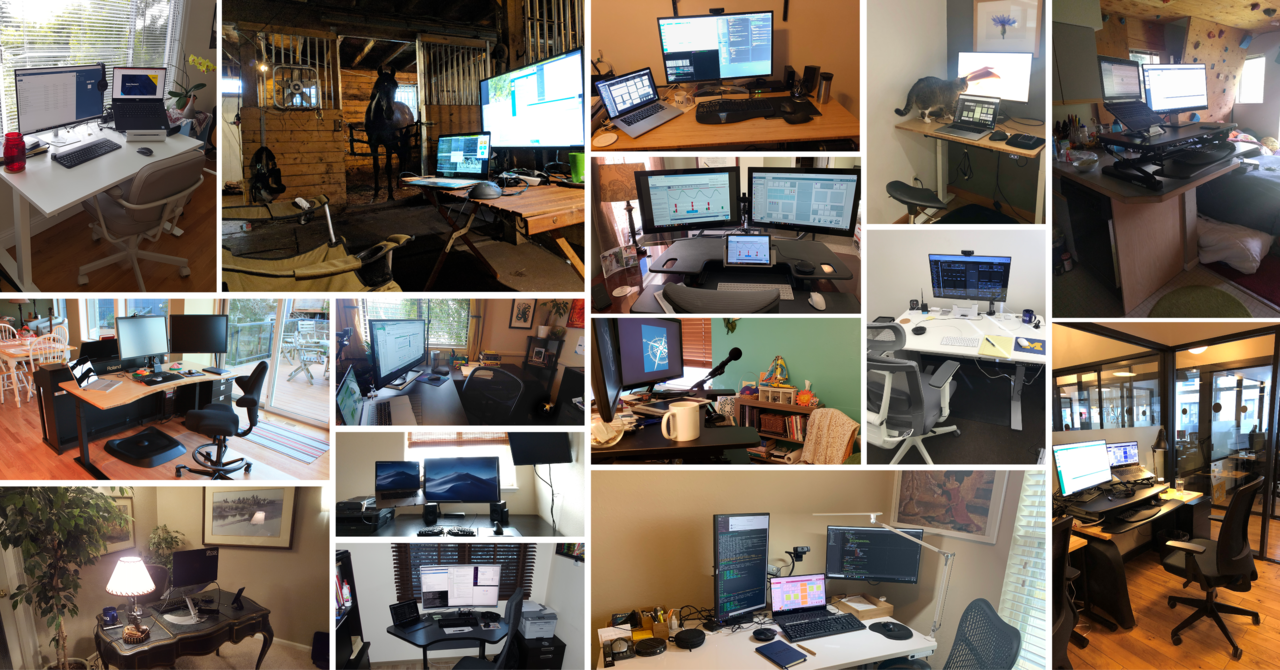
Startups are often associated with the benefits and toys provided in their offices. Foosball tables! Free food! Dog friendly! But what if the future of startups was less about physical office space and more about remote-first work environments? What if, in fact, the most compelling aspect of a startup work environment is that the employees don’t have to go to one?
A remote-first company model has been Seeq’s strategy since our founding in 2013. We have raised $35 million and grown to more than 100 employees around the globe. Remote-first is clearly working for us and may be the best model for other software companies as well.
So, who is Seeq and what’s been the key to making the remote-first model work for us? And why did we do it in the first place?
Seeq is a remote-first startup – i.e. it was founded with the intention of not having a physical headquarters or offices, and still operates that way – that is developing an advanced analytics application that enables process engineers and subject matter experts in oil & gas, pharmaceuticals, utilities, and other process manufacturing industries to investigate and publish insights from the massive amounts of sensor data they generate and store.
To succeed, we needed to build a team quickly with two skill sets: 1) software development expertise, including machine learning, AI, data visualization, open source, agile development processes, cloud, etc. and 2) deep domain expertise in the industries we target.
Which means there is no one location where we can hire all the employees we need: Silicon Valley for software, Houston for oil & gas, New Jersey for fine chemicals, Seattle for cloud expertise, water utilizes across the country, and so forth. But being remote-first gives has made recruiting and hiring these high-demand roles easier much easier than if we were collocated.
Image via Seeq Corporation
Job postings on remote-specific web sites like FlexJobs, Remote.co and Remote OK typically draw hundreds of applicants in a matter of days. This enables Seeq to hire great employees who might not call Seattle, Houston or Silicon Valley home – and is particularly attractive to employees with location-dependent spouses or employees who simply want to work where they want to live.
But a remote-first strategy and hiring quality employees for the skills you need is not enough: succeeding as a remote-first company requires a plan and execution around the “3 C’s of remote-first”.
Talkspace, the platform that lets patients and therapists communicate online, has today announced the close of a $50 million financing round led by Revolution Growth. Existing investors, such as Norwest Venture Partners, Omura Capital, Spark Capital, and Compound Ventures are also participating in the round.
As part of the deal, Revolution Growth’s Patrick Conroy will join the Talkspace Board of Directors.
Talkspace launched back in 2012 with a mission to make therapy accessible to as many people as possible. The platform allows users to pay a subscription fee for unlimited messaging with one of the company’s 5,000 healthcare professionals. Since launch, Talkspace has rolled out products specific to certain users, such as teenagers or couples.
The company also partners with insurance providers and employers to offer Talkspace services to their members/employees as part of a commercial business. Today, Talkspace has announced a partnership with Optum Health. This expands TalkSpace’s commercial reach to 5 million people.
According to the release, Talkspace will use the funding to accelerate the growth of its commercial business.
Here’s what Talkspace CEO and cofounder Oren Frank had to say in a prepared statement:
Our advanced capabilities in data science enable us to not only open access to therapy, but also identify the attributes of successful therapeutic relationships and apply that knowledge throughout the predictive products we build, to the therapists that use our platform, and in the content we provide.
This brings Talkspace’s total funding to $106.7 million, according to Crunchbase.